Freeview Without an Aerial: Your Options in 2026
The most common question we receive about Freeview is whether you still need a TV aerial. The answer is no — not anymore. While traditional Freeview boxes receive channels through a rooftop or indoor aerial, modern alternatives let you access the same channels entirely through your internet connection.
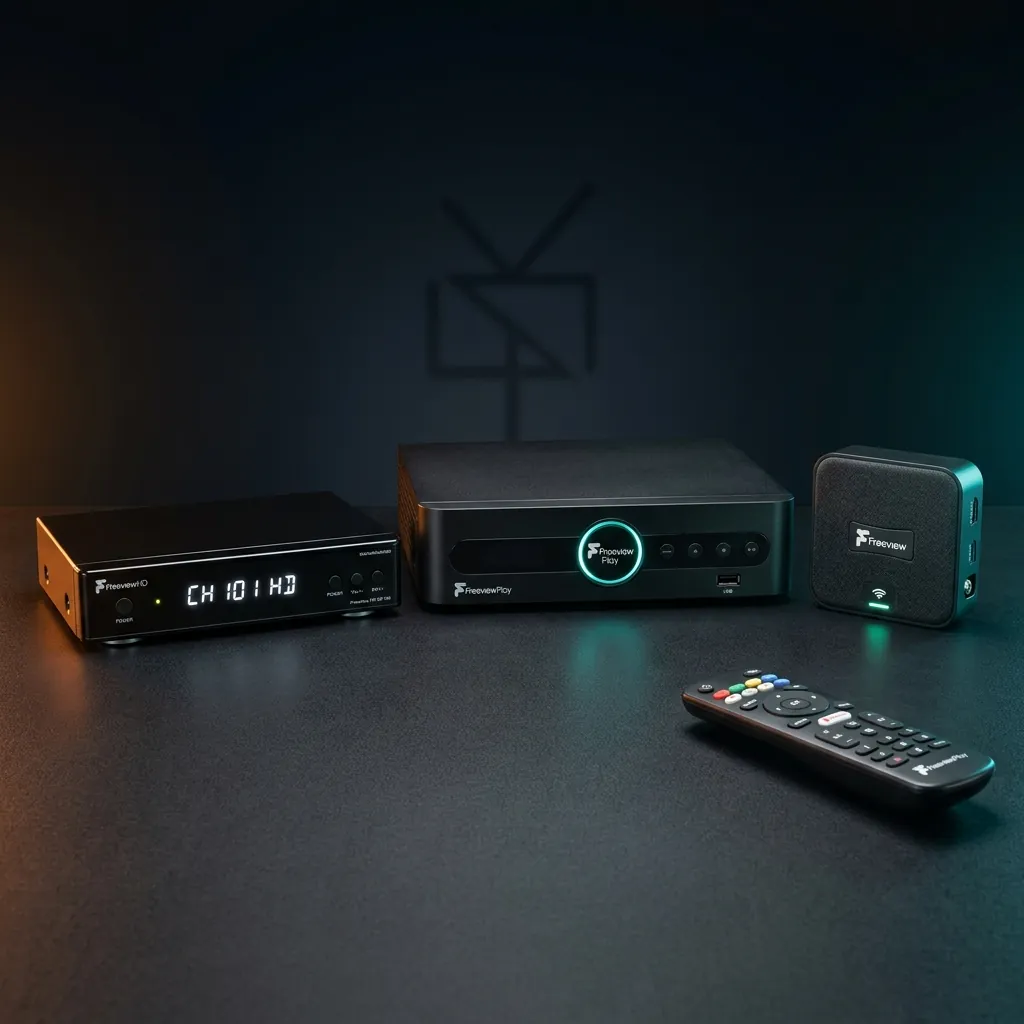
WiFi-enabled Freeview boxes connect to both your aerial (if you have one) and your broadband, combining live channels with internet-delivered catch-up and on-demand content through Freeview Play. The newer Freely platform goes further by delivering all channels entirely over the internet — no aerial socket needed at all.
If you are in a property without an aerial, or simply want to avoid the installation hassle, our dedicated guide covers every way to get Freeview without an aerial — from Smart TV apps and streaming devices to WiFi-enabled boxes and the Freely platform. This is one of our most popular guides, and for good reason: it solves a real problem that millions of UK viewers face.
Read our Freeview without aerial guideTV Boxes With All Channels Free
If you want a single device that gives you every free channel available in the UK without any ongoing subscription, you have several excellent options. Traditional Freeview boxes deliver 70+ channels through an aerial for a one-time purchase price. Android TV boxes and streaming sticks add FAST channels from platforms like Pluto TV and Samsung TV Plus, expanding your free channel count into the hundreds.
The best TV boxes with all channels free combine Freeview access with internet streaming capabilities, giving you the widest possible channel selection at zero monthly cost. Our guide compares Freeview boxes, Android boxes, and streaming sticks to find the best all-in-one free TV solution.
Set-Top Box Comparison: Freeview, Freesat, Streaming & More
The UK set-top box market offers four main categories: Freeview boxes (aerial-based, 70+ channels free), Freesat boxes (satellite-based, 200+ channels free), streaming boxes (internet-based, access to apps and FAST channels), and recording boxes (any of the above with built-in hard drives for pause, rewind, and recording).
Our comprehensive set-top box guide compares all four types across price, channel count, recording capability, smart features, and ease of installation. If you are deciding between Freeview and IPTV hardware specifically, our IPTV box guide covers the key differences.
Freeview on Amazon Firestick
The Amazon Firestick is the cheapest way to watch Freeview channels without a traditional box or aerial. By installing the individual UK broadcaster apps — BBC iPlayer, ITVX, Channel 4, and My5 — you can access all major Freeview channels live and on catch-up through your internet connection.
Our step-by-step guide to Freeview on Firestick covers app installation, channel availability, and tips for the best viewing experience. The Firestick also supports IPTV services if you want to add premium channels alongside your free Freeview content.
TVs With Built-in Freeview Recorders
Several modern televisions come with built-in Freeview HD tuners and hard drives, eliminating the need for a separate set-top box entirely. These TVs let you watch, pause, rewind, and record live Freeview programmes from the built-in tuner while also accessing internet-based streaming apps through the Smart TV platform.
Our guide to the best TVs with built-in Freeview recorders compares models from Samsung, LG, and Sony with recording capabilities, storage sizes, and twin-tuner support (which lets you record one channel while watching another).
Satellite TV Boxes: Freesat, Sky & Beyond
If Freeview reception is poor in your area (common in valleys and behind tall buildings), satellite TV is a reliable alternative. Freesat delivers over 200 channels for free using a satellite dish — more channels than Freeview and no aerial needed. Sky Q and Sky Glass offer premium content on top, but at a monthly subscription cost.
Our satellite TV boxes guide compares every option, and our blog post Freeview vs Freesat vs YouView provides a direct comparison if you are deciding between platforms.
Terrestrial TV Explained
Terrestrial television — the system of transmitting TV signals from ground-based towers to rooftop aerials — has been the foundation of UK broadcasting since the 1930s. The UK completed its switchover from analogue to digital terrestrial television (Freeview) in 2012, and this system continues to serve millions of homes today.
Our guide to terrestrial TV explains how the system works, what channels are available, coverage across the UK, and how terrestrial compares to satellite and internet-based alternatives. If you are wondering whether to keep your aerial or switch to internet TV, our do you need a TV aerial article provides practical guidance.
Ready to Subscribe?
Plans from £2.22/month with up to 27,000+ channels, 190,000+ VOD, and 4K quality. 30-day money-back guarantee.
Not Sure Which Freeview Box to Buy?
Tell us your budget and setup, and we will recommend the best option for you. Free advice, no sales pitch.
Freeview Blog Posts & Tutorials
Freeview vs Freesat vs YouView
Three platforms compared on channels, cost, and features.
How to Retune Freeview Channels
Quick step-by-step guide for Samsung, LG, Sony, and Panasonic TVs.
Do You Need a TV Aerial in 2026?
When to keep your aerial and when internet alternatives are better.